
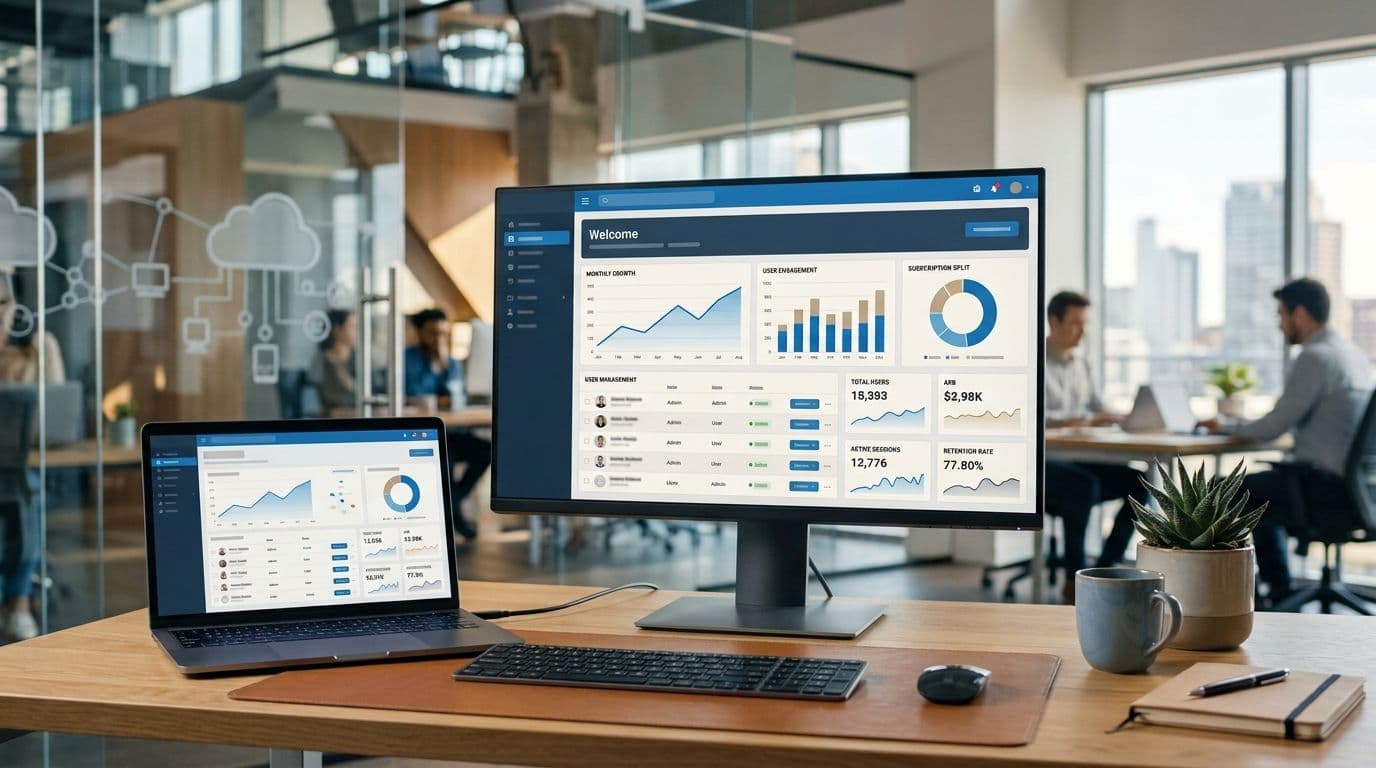
Software has changed dramatically over the past few decades. Businesses once had to purchase software licenses, install applications on individual computers, maintain servers, and handle expensive upgrades themselves.
Today, businesses can simply open a browser, sign in, and start using powerful software immediately.
This is the idea behind Software as a Service (SaaS).
From project management and accounting to customer relationship management, communication, marketing, and analytics, SaaS products have become an essential part of modern business operations.
What Is a SaaS Product?
A SaaS product is software that is hosted and managed by a service provider and delivered to customers over the internet.
Instead of purchasing and installing the software locally, customers typically access it through a web browser or mobile application.
Common SaaS products include:
Customer relationship management platforms Project management tools Accounting software Email marketing platforms Communication tools Human resource management systems E-commerce platforms Analytics and reporting platforms
The customer usually pays through a subscription or usage-based model.
Why Are SaaS Products So Popular?
SaaS products have become popular because they make business software easier to access, maintain, and scale.
Businesses can avoid large upfront infrastructure investments while still gaining access to continuously updated software.
Lower Initial Investment
Traditional software may require expensive licenses, servers, installation, and maintenance.
SaaS allows businesses to start with a subscription and scale their usage as their needs grow.
Access From Anywhere
Because SaaS applications are generally cloud-based, users can access them from different locations and devices.
Automatic Updates
The SaaS provider manages software updates, security patches, and new features centrally.
Scalability
Businesses can increase users, storage, or usage as they grow without completely replacing their software infrastructure.
How Does a SaaS Product Work?
A typical SaaS platform contains several layers:
Frontend → Backend → Database → APIs → Cloud Infrastructure
The frontend provides the user interface, while the backend manages business logic, authentication, data processing, integrations, and application services.
The database stores customer and application data, while cloud infrastructure provides the resources required to operate the platform.
SaaS Business Models
There are several common ways SaaS companies generate revenue.
Subscription
Customers pay monthly or annually for access.
Per-User Pricing
Customers are charged according to the number of users.
Usage-Based Pricing
Customers pay according to their actual usage, such as API requests, storage, transactions, or processing.
Freemium
A free version attracts users while advanced features are offered through paid plans.
What Makes a Successful SaaS Product?
Successful SaaS products usually focus on three fundamental areas:
- Solving a Real Problem
The product needs to solve a problem customers genuinely care about.
- Simple User Experience
Customers should be able to understand the product quickly and accomplish important tasks without unnecessary complexity.
- Continuous Value
Customers continue paying when the product consistently saves time, reduces costs, increases revenue, automates work, or improves decision-making.
Building a SaaS MVP
One of the biggest mistakes SaaS startups make is trying to build too many features before launching.
A better approach is to start with an MVP — Minimum Viable Product.
The MVP should contain only the essential functionality required to solve the core customer problem.
A typical process is:
Problem → MVP → Real Users → Feedback → Improvements → Scalable Product
This approach allows businesses to validate their idea before investing heavily in additional features.
The Future of SaaS
SaaS products are continuing to evolve with technologies such as:
Artificial intelligence Automation Real-time collaboration Advanced analytics API ecosystems Personalized experiences Workflow automation
However, technology alone does not guarantee SaaS success.
The strongest SaaS products continue to focus on one fundamental principle:
Solve an important customer problem better than the alternatives.
Conclusion
SaaS has transformed the way businesses purchase, deploy, and use software.
Instead of treating software as something that is purchased once and installed locally, SaaS delivers software as an ongoing service.
For businesses, this can mean lower initial costs, easier access, continuous updates, and greater scalability.
For entrepreneurs, SaaS creates opportunities to build recurring-revenue businesses that can grow alongside their customers.
Ultimately, successful SaaS products are built around real customer problems, clear value, excellent user experience, reliable technology, and continuous improvement.
Shakibul Islam
Related Articles Posts
Software Agency vs. In-House Team: How to Make the Right Call