- AI Development Is Moving from Experimentation to Integration
- AI Is Automating More Repetitive Tasks
- AI Development Improves Analysis and Decision-Making
- AI Agents Are Gradually Changing the Way Businesses Work
- AI Is Transforming Software Development
- AI Development Creates New Opportunities for Products and Services
- AI Transformation Requires the Right Infrastructure
- Security and Governance Are Becoming Essential
- Not Every Business Is Fully Benefiting from AI Yet
- How Businesses Can Prepare for AI Development in 2026
Artificial intelligence development is playing an increasingly important role in business digital transformation. In 2026, AI is no longer limited to chatbots or content generation. Businesses are gradually integrating it into their software, internal processes, customer service operations, and analytics tools.
This evolution is also reflected in recent AI adoption data. A global McKinsey survey published in August 2026 indicates that nearly nine out of ten respondents say their organization regularly uses AI in at least one business function. Meanwhile, 44% report that AI is now being deployed across their organization, compared with 38% the previous year.
However, adopting a technology alone is not enough to transform a business. Meaningful change happens when AI becomes integrated into the processes, data, and systems that support everyday operations.
AI Development Is Moving from Experimentation to Integration
During the early years of generative AI, many businesses began experimenting with tools capable of generating text, code, images, and conversational responses.
In 2026, the approach is evolving. Businesses are increasingly looking to integrate AI directly into their workflows.
According to McKinsey, 56% of surveyed organizations report using AI in at least three business functions, compared with 51% in the previous survey. The use of AI agents is also growing, particularly among large enterprises.
This shift means AI is gradually becoming part of business systems rather than simply a tool used individually by employees.
AI Is Automating More Repetitive Tasks
One of the most noticeable changes involves automation.
AI systems can help analyze documents, search for information, summarize data, classify requests, and support customer service operations. In certain situations, they can also execute multiple steps within a process, subject to appropriate human supervision.
Data from the U.S. Census Bureau shows that writing, document analysis, and information research are among the main uses of generative AI in professional tasks. The study also indicates that 66% of businesses using AI primarily use it to augment human capabilities rather than directly replace workers’ tasks.
The objective is not necessarily to eliminate human involvement. Instead, businesses can reduce the time spent on repetitive activities, allowing teams to focus on work requiring greater judgment, creativity, or interaction.
AI Development Improves Analysis and Decision-Making
Businesses now have access to large volumes of data from customers, operations, sales, and internal systems. However, having data does not automatically lead to better decision-making.
Artificial intelligence can help transform this data into actionable insights. It can support document analysis, trend identification, information retrieval, and the summarization of complex datasets.
A 2026 Deloitte study indicates that 53% of surveyed organizations report improvements in insights and decision-making through AI. Productivity and efficiency remain the most frequently reported benefits, with 66% of organizations identifying gains in these areas.
However, AI does not automatically replace the judgment of business leaders. Data quality, business context, and human oversight remain essential for important decisions.
AI Agents Are Gradually Changing the Way Businesses Work
Another important development in 2026 is the growth of AI agents.
A traditional assistant generally responds to a specific request. An agentic system can, depending on its design and permissions, use different tools and complete multiple steps of a task.
This development is particularly relevant to businesses seeking to automate processes involving several actions.
McKinsey reports in 2026 that 40% of respondents from large companies say they have scaled AI agents, compared with 27% the previous year. The study also shows that businesses are actively experimenting with agents for software development.
This does not mean every business should immediately automate its processes with AI agents. Their value depends on the use case, data quality, integration with existing systems, and the level of human oversight provided.
AI Is Transforming Software Development
Software development itself is evolving through artificial intelligence.
Developers can use AI tools to generate code, explain functions, identify errors, create tests, and accelerate certain stages of the development process.
This trend is gaining momentum in 2026. According to McKinsey, approximately one in five surveyed organizations report scaling coding agents, while 32% indicate that they have chosen to develop certain software or features internally that they would previously have purchased.
However, AI does not make software engineering unnecessary. Architecture design, security, code validation, data management, and understanding business requirements remain essential responsibilities.
AI Development Creates New Opportunities for Products and Services
AI is not only useful for improving existing processes. It can also help businesses develop entirely new products and services.
For example, an application may include a conversational interface, recommendation engine, automated document analysis, or predictive functionality.
Deloitte indicates that approximately one-third of surveyed organizations are beginning to use AI to transform their businesses more fundamentally, including by creating new products and services or redesigning processes and business models.
This creates opportunities beyond simple automation. Businesses can explore how AI might change their value proposition and customer experience.
AI Transformation Requires the Right Infrastructure
To achieve reliable results, businesses cannot simply add an AI feature to existing software without considering the surrounding technical environment.
Data must be accessible within a controlled framework. Systems must be able to communicate with one another. Infrastructure must also meet the project's performance, availability, and security requirements.
This is why AI development is often connected to other technology areas, including cloud computing, APIs, databases, software architecture, and DevOps.
AI transformation therefore becomes a broader technology initiative rather than simply the integration of an AI model.
Security and Governance Are Becoming Essential
As AI becomes more deeply integrated into business processes, security, privacy, reliability, and governance become increasingly important.
Businesses need to determine which data AI systems can use, who can access their outputs, how those outputs are validated, and which decisions must remain under human control.
The NIST AI Risk Management Framework provides a voluntary framework to help organizations incorporate trustworthiness considerations into the design, development, use, and evaluation of AI systems. NIST also provides a profile addressing risks specific to generative AI.
A serious AI strategy must therefore combine innovation with risk management.
Not Every Business Is Fully Benefiting from AI Yet
However, it would be incorrect to present AI as an automatic solution to every business problem.
The value of AI depends on the relevance of the use case, the quality of available data, the readiness of existing systems, and the ability of employees to adopt new workflows.
Some businesses may benefit from simple automation, while others require more advanced AI applications or custom software development. In many cases, starting with a clearly defined business problem is more effective than implementing AI simply because the technology is available.
Successful adoption also requires realistic expectations, proper testing, employee training, and continuous evaluation.
How Businesses Can Prepare for AI Development in 2026
Businesses looking to benefit from AI should begin with a practical approach:
-
Identify business opportunities: Find repetitive tasks, operational challenges, or customer needs that AI could address.
-
Evaluate existing systems: Review current software, data infrastructure, and integration capabilities.
-
Prioritize suitable use cases: Focus on projects with measurable business value and manageable risks.
-
Develop a clear AI strategy: Define objectives, responsibilities, technical requirements, and success metrics.
-
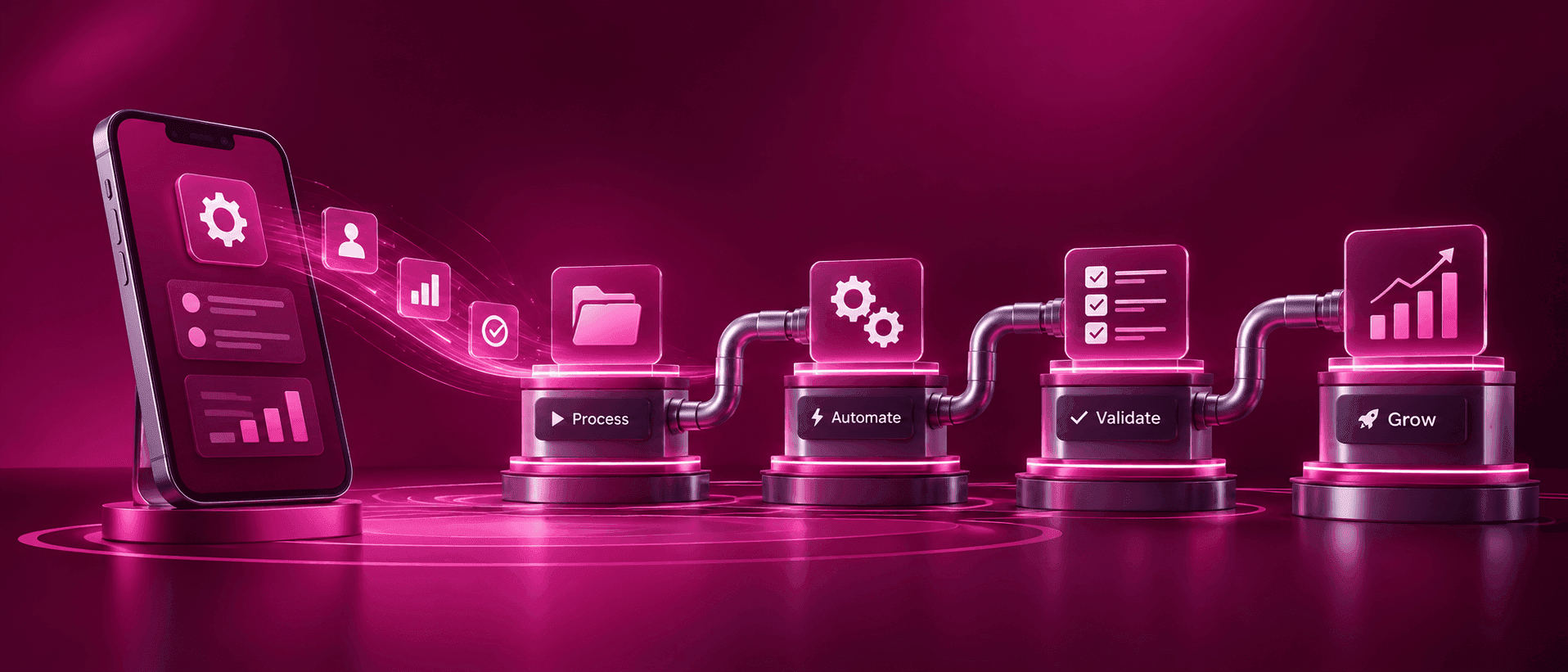
Build and test carefully: Validate AI functionality, reliability, security, and performance before deployment.
-
Monitor and improve: Evaluate results continuously and adapt the solution as business requirements evolve.
A structured approach helps businesses avoid unnecessary complexity and focus on AI initiatives that deliver practical value.
Artificial intelligence development is transforming businesses in 2026 by improving automation, supporting decision-making, accelerating software development, and creating new opportunities for digital products and services.
However, successful AI adoption requires more than choosing a model or implementing a new tool. Businesses need the right strategy, infrastructure, data, governance, and technical expertise to integrate AI effectively.
Organizations that approach AI development with clear objectives and a focus on real business needs are better positioned to improve efficiency, strengthen competitiveness, and prepare for future growth.
Shihadul Islam Tihim
Related articles
What Should I Look for in an AI Agent Platform?